Most people think of intelligence as something that happens in the brain. Thinking, analyzing, making decisions.
But there is another kind of intelligence that is just as important, and often far more immediate - your body’s ability to sense itself, organize itself, and respond to the world around it. This is your kinesthetic intelligence, and it lives within the fascial system.
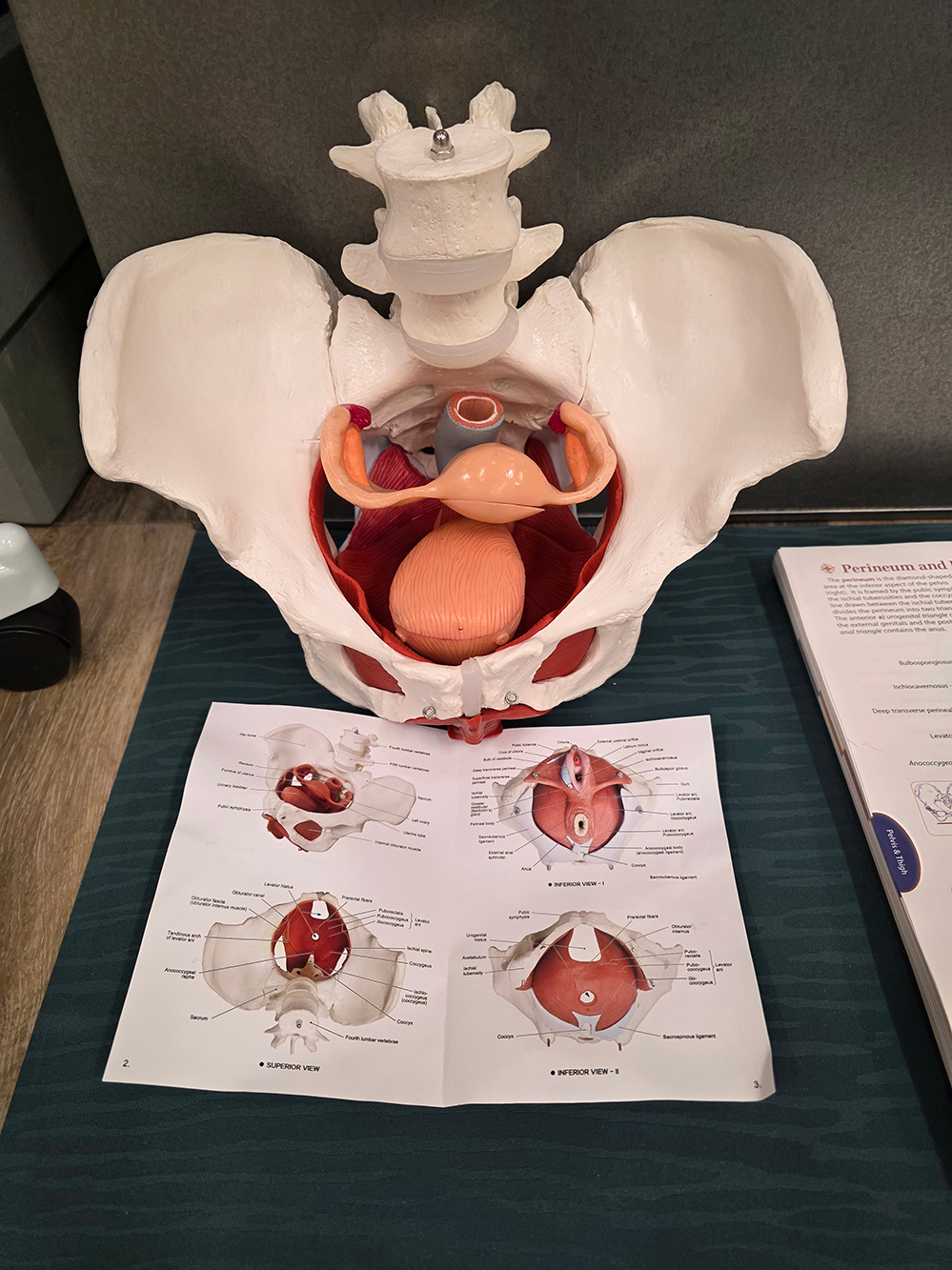
Fascia is not simply connective tissue holding the body together.
It is a continuous, responsive network that transmits force, organizes tension, and - critically - houses the sensory system that allows you to feel yourself. Every stair you climb, every top shelf you reach for, every moment of balance or instability is registered through this system.
This fascial sensory system is how you know where you are in space, how you adjust without thinking, and how your body adapts to demand.
When this system is functioning well, movement becomes more intelligent.
You don’t just move - you respond. You feel subtle changes in load and position. You make micro-adjustments standing in line or hiking up a hill. Your effort becomes more efficient because it is directed. There is less guessing, guarding, wincing or bracing.
Training this fascial sensory system has implications beyond your everyday movement. When you can feel yourself clearly, your sense of self becomes more stable.
When you can walk tall with your heart lifted, your confidence changes. Your decisions - about how to move, how to train, how to care for your body - become more informed and more precise because you’re attuning to how you feel.
Many people have lost access to this level of awareness.
Not because something is broken, but because the system has gone quiet. Hours of sitting, hunched over screens and disuse of of the body can dull the sensory clarity of the fascial network. Foot, shoulder and neck positioning become harder to feel and ultimately harder to change.
This is why so many people can follow instructions, perform exercises, and still not experience meaningful or lasting results. You cannot change what you cannot feel.
Most approaches fall because they don’t address this fascial sensory system.
- Some focus on lifting heavy - strength, alignment, repetition - without restoring the sensory system that guides those changes.
- Others focus on the nervous system in isolation, attempting to influence the brain without sufficiently engaging the body through meaningful movement that stimulates reconnection and repair.
- Some somatic approaches attempt to bridge this gap by emphasizing release and relaxation. This can reduce symptoms but do not necessarily build new, more efficient patterns of movement in other activities.
Each of these perspectives offers something valuable, but on their own, they remain incomplete.
To create real, lasting change, you need 3 essentials:
- Fascial tension and load,
- Neural input and coordination,
- Somatic awareness and sensing.
Rouleau brings this together in what we call fascial neurosomatics).
In Rouleau, we begin by Organizing the body and positioning joints so they can receive and transmit force effectively. From there, we Activate the system - not just at the level of individual muscles, but across connected fascial pathways from the bottom of your feet to the top of your head.
As this happens, proprioception improves. The body becomes more perceptible to itself. You begin to feel where you are, how you are moving, what’s not really moving and how different parts of your body relate to one another. This is not conceptual. It is immediate, physical and something you feel directly. This is kinesthetic intelligence.
At Rouleau, we build Integration.
Our movement is trained in controlled environments so it can automatic during more complex activities like sport and every day life. Strength is no longer isolated to individual poses or certain lifts; it becomes transferable.
The body learns not just to perform an exercise, but to organize itself under real conditions - walking, lifting, reaching, reacting. Your reps become nutritious. You respond to your golf coach’s directions easier and more intuitively after training your fascial sensory system. This is where change becomes meaningful and durable.
This process is not just about improving movement.
It is about letting you direct the new version of yourself that inevitably unfolds as time marches on - for better or worse. When you can feel what is happening inside your fascial sensory system, you are no longer dependent on external cues or constant correction. You can make adjustments in real time.
You can choose how you move - or perhaps more accurately, your body can choose the most optimal path on it’s own. Over time, this leads to a greater sense of autonomy - what we would call health sovereignty.
Here’s the larger context to consider:
The body is always adapting. It is either becoming more capable, more coordinated, and more responsive - or gradually losing those qualities. There is no neutral state. If you’re not getting stronger, you’re getting weaker.
Without intentionally nutritious input for this fascial sensory system, decline becomes your default. Your movement becomes less efficient, proprioception dulls, and the gap between what the body is capable of and what you wish you could do continues to widen.
Rouleau is not simply about spot-fixing problems.
It is about developing and maintaining a body that continues to adapt and improve over time. Fascia, as the body’s intelligence network, is central to that process. When it is engaged properly - through organized tension, coordinated movement, and clear sensory input - it allows the body to function as a coherent whole in everything else you like to do.
This is the foundation we will explore in the upcoming series, Fascial Neurosomatics: Your Body’s Intelligence Network.
The goal is not just to understand these ideas, but to experience them directly in your body, and develop the capacity to apply them in your own movement and training.
Join in person in Edmonton or receive the online recordings.